
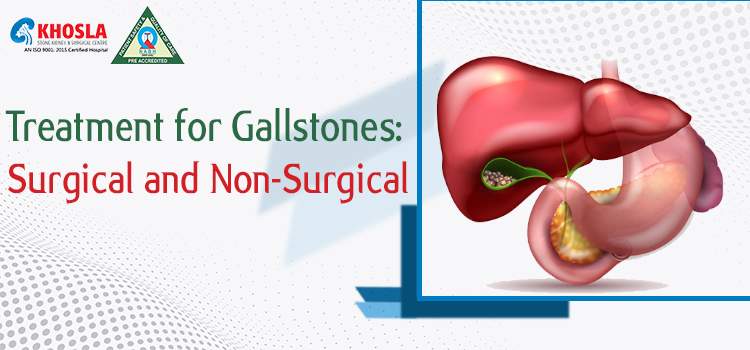
There are mainly two types of gallstones:
- Cholesterol Gallstones (Most Common Type) – Most of the undissolved cholesterol in these yellow gallstones is hard.
- Pigment Gallstones – Too much bilirubin is found in these dark brown or black gallstones.
Gallstones Surgery Treatment Options
The most popular way to treat pigment gallstones is with a cholecystectomy, a procedure that removes the gallbladder. Your surgeon may carry out the procedure invasively or minimally invasively while you are anesthetized.- Laparoscopic Cholecystectomy
- Open Cholecystectomy
Non-Surgical Gallstone Treatment Options
If you have cholesterol stones and are unable to have surgery because of underlying medical issues, your doctor may suggest one of the following non-surgical options.Oral Dissolution Therapy: Medications like chenodiol and ursodiol, which contain bile acid, can dissolve small gallstones. The gallstones may not completely dissolve for several months or even years.Endoscopic Retrograde Cholangiopancreatography (ERCP): This treatment is done to remove gallstones that have gotten stuck in the common bile duct.Shock Wave Lithotripsy: This is an additional treatment for gallstone removal. Ursodiol medicine, however, is occasionally applied during this procedure.How to Maintain a Healthy Gallbladder
Follow a healthy eating planYou can reduce your risk of developing gallstones by eating a healthy, balanced diet. You might consider including some of the foods listed below in your diet:- Consume nutritious foods such as almonds, meat, fish, eggs, beans, lentils, and chickpeas.
- Eat more calcium, fiber, and vitamin C in your diet.
- Drink coffee and just a little amount of alcohol.
- Avoid fatty, sugary, and processed foods.
- Stay hydrated.
Other Tips to Maintain a Healthy Gallbladder:
- keep a healthy weight.
- Regular exercise
- Avoid overeating. Eat some simple-to-digest little meals instead.
- If you are overweight or obese, try decreasing your weight gradually.